


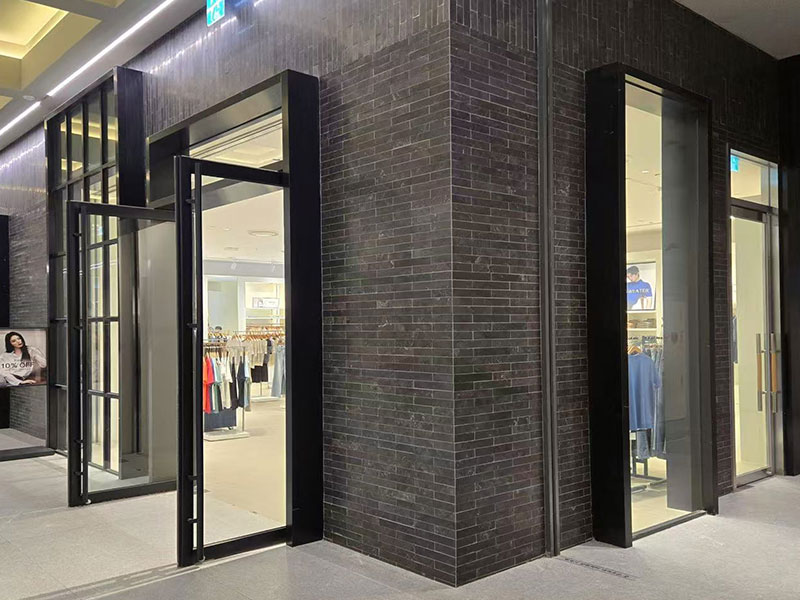
There is no "correct" method for processing stone background walls. The key lies in selecting a suitable plan based on personal needs, spatial characteristics, and aesthetic preferences. Different processing techniques will produce different decorative effects, suitable for different scenarios and styles. Therefore, the principle of "what suits you is the best" is crucial
Stone processing techniques are diverse and each has its own characteristics. Common techniques include:
Polishing process: The surface is as smooth as a mirror, with high glossiness, appearing magnificent and suitable for spaces such as living rooms that require a sense of grandeur.
Matte finish: The surface is smooth but has low glossiness, producing a diffuse reflection effect and giving a rustic and natural feel. It is more suitable for areas that emphasize warmth, such as kitchens and bathrooms.
Machine cutting process: The surface is rough, with distinct patterns and a rugged style, often used in designs that pursue a primitive texture.
Acid washing process: It forms small indentations through chemical corrosion, resulting in a simple and natural-looking effect, commonly used for marble or limestone.
In addition, artificial stone can achieve more complex customization, such as grooving, concave-convex splicing, or irregular sculpting, with high flexibility and good color difference control, making it suitable for creative designs with a modern artistic feel or luxurious style
When making a choice, multiple factors need to be comprehensively considered:
Space function: For example, polished surfaces are easy to show class but require regular maintenance to maintain their luster, while matte or natural surfaces are more resistant to dirt and have good anti-slip properties, making them suitable for high-frequency use areas.
Stone type: Natural stones (such as marble and granite) have unique textures but are relatively expensive and require complex processing; artificial stones have strong malleability and lower cost, making them suitable for personalized styling.
Decoration style: For modern minimalist style, cutting and splicing or concave-convex design can be used to enhance the sense of lines, while for European style, three-dimensional decorations such as Roman moldings are suitable.
Budget and maintenance: The polished surface needs regular crystal surface treatment, while the maintenance of natural or matt surfaces is relatively simple
Decisions should be based on a comprehensive assessment of one's own spatial conditions, usage habits, and aesthetic preferences. By weighing the characteristics of craftsmanship, the advantages and disadvantages of materials, and practical needs, a suitable solution can be found.
 WhatsApp
 Home
Home Tel
Tel Product